


 Healthcare
 Manufacturing
 Hospitality & Travel

 Manager Enablement
 Performance Reviews
 Employee Experience


 WHY MACORVA
Hybrid and remote learning models are now standard across most industries. With 60% of remote-capable workers preferring hybrid models and 33% preferring fully remote according to Gallup, the real question as we make our way through 2026 is no longer where employees learn but whether their learning translates into measurable growth.
Businesses now face a threat of increased turnover if they fail to meet these expectations. However, expanding remote learning positions comes with its own challenges, including the need for remote learning solutions that can engage an increasingly dispersed workforce. The most effective solution is a unified learning platform that gives employees access to L&D materials from any location and on any device.
Here are the top learning and development trends shaping 2026, from AI-driven personalization and skills-based hiring to the role of continuous feedback in building workforce capability.

Continuous Learning and Upskilling
According to LinkedIn’s 2025 Workplace Learning Report, career progression is now the #1 motivation for employees to learn. Helping employees advance their careers jumped from a number nine L&D priority in 2022 to a top focus area today, and 91% of L&D professionals say continuous learning is more important than ever for career success.
Businesses must implement continuous learning programs to keep pace with technological advancements and changing worker needs. Modern workers crave training in trending technologies like AI, motivated by the potential for career growth using their organization’s tools and opportunities. Teams that do not successfully integrate these learning goals risk lower engagement and higher turnover rates.
Centralized learning management systems can help managers integrate learning directly into their employees’ daily workflows. This approach minimizes disruption while allowing employees to observe the results of their learning immediately.
AI in Learning and Development
To capitalize on the growing number of workers who prioritize career advancement, businesses can now use AI to personalize learning and development. AI algorithms analyze an employee’s trajectory with a skill gap analysis to identify areas for improvement, then cross-reference performance data to understand learning preferences. Combining the employee’s needs and goals allows AI to create personalized learning paths that keep them engaged.
TalentLMS’s 2026 report found that 84% of HR managers believe generative AI will help close skill gaps, making AI-driven learning one of the fastest-moving investment areas for 2026. The catch is communication: only 25% of employees strongly agree their employer has clearly explained how AI should be used at work (Gallup, 2025). That gap between access and execution is one L&D teams are increasingly being asked to close.
AI can also be deployed in administrative tasks like real-time feedback analysis. Automating labor-intensive data management tasks frees managers for tasks requiring human input, such as in-person assessments. Yet, despite the widespread use and benefits of AI, businesses must ensure human oversight of AI-driven learning environments. While employees crave development in AI-related skills, they still need human interaction to stay engaged.
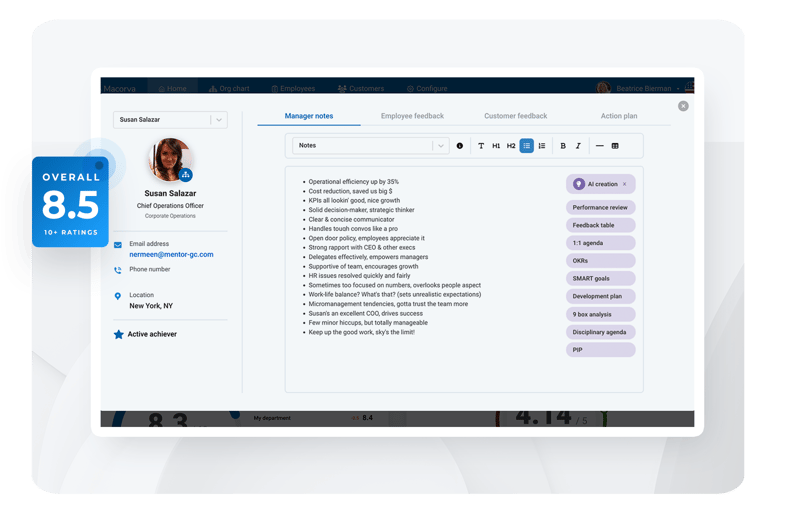
Macorva’s Radiant AI works this way. It reads 360 feedback and engagement data, then drafts personalized development plans so HR teams don’t have to build them one at a time. Read more about how Radiant AI builds personalized development plans in this blog.
Skills-based Hiring and Talent Development
The resume is losing its grip on talent decisions. TalentLMS’s 2026 report also found that 79% of HR managers now say their company is taking a skills-based approach to hiring, training, and career development. That shift is reshaping the L&D function itself. Instead of training people for roles, teams are mapping real skills to real business outcomes and building programs to close specific gaps.
A skills-based approach only works when L&D has visibility into the skills the workforce actually has. Surveys, peer reviews, manager assessments, and performance data all hold useful signals, but most organizations struggle to pull them together in one place. Platforms like Macorva EX consolidate those data streams so L&D leaders can see where the real skill gaps are and target their investments accordingly.
Organizations that build this visibility now will be better positioned to adapt as roles continue to shift and new skills emerge faster than traditional hiring can keep up with.
LXP vs LMS: What’s the Difference?
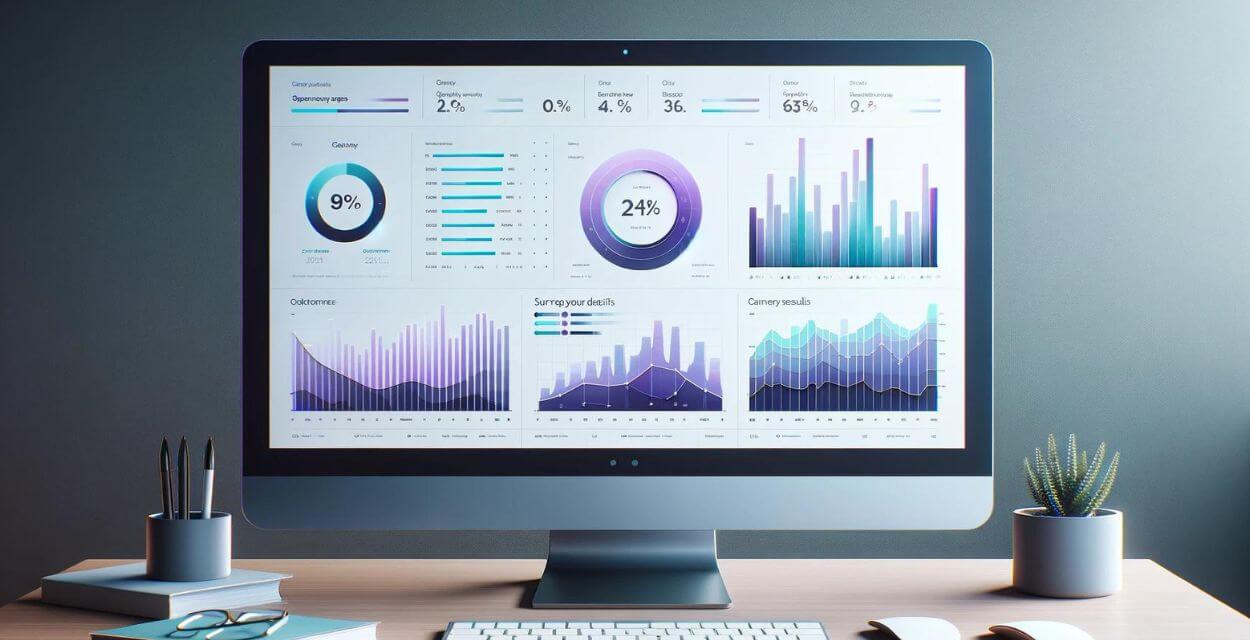
Traditional learning management systems were built for compliance, not growth. They track course completions and certifications, but they don’t personalize, recommend, or adapt. Learning experience platforms do. Business Research Insights values the global LXP market at $5.03 billion in 2026 and projects it to reach $68.95 billion by 2035, a 33.79% compound annual growth rate.
The practical difference comes down to who the platform is built for:
-
LMS: serves the administrator. Built around course assignments, completion tracking, and compliance reporting.
-
LXP: serves the learner. Uses AI to curate content, recommend next steps, and surface peer insights based on role, goals, and activity.
For most organizations in 2026, the question isn’t whether to replace the LMS. It’s whether to layer an LXP on top of it.
Microlearning in the Workplace
Long-form training modules are becoming less dominant as today’s learners want short, focused content delivered inside the tools they already use. Industry research shows microlearning consistently achieves retention rates of 64 to 84 percent compared with traditional course-based training. This is learning in the flow of work, and it’s becoming the default approach for 2026.
Successful microlearning implementation depends on linking every lesson to a specific growth area. Without clear paths and reinforcement, short-form content just becomes noise. Macorva solves this by connecting development plans directly to day-to-day feedback cycles, so each micro-lesson ties back to a growth area the employee and their manager already know that matters.
Learning Analytics and L&D ROI
In addition to personalizing employee career paths, data-driven learning management systems have become more efficient at collecting and organizing their own performance data. These analytics allow companies to measure the effectiveness of L&D programs, including their return on investment (ROI).
By creating actionable insights from huge amounts of performance data, learning experience platforms give managers greater control over their employees’ learning progress. They allow managers to link the learning program’s results with the company’s goals, which LinkedIn’s 2025 report confirms as the top strategic priority for L&D teams.
For example, a manager can learn through performance assessments that certain employees highly value their proficiency in AI skills related to their field. Using data analytics, these managers can detect whether employees meet their goals or still need assistance. They can then respond with learning content recommendations based on their needs.
LinkedIn’s 2025 report found that 83% of “career development champion” organizations plan to maintain or increase their learning investment. The teams that can measure real impact are the ones winning the budget.
The latest insights into workforce training and engagement

A platform that can correctly interpret learning data – including performance data, real-time feedback, and more – can help managers drive workforce development in both reactive and proactive ways. This means that the learning experiences rise to meet the evolving desires of the modern workforce while also personalizing their path based on performance.

Mentorship and Social Learning Programs
Despite the growing importance of AI in learning and development, a human connection remains a crucial foundation for effective social learning. Industry L&D reports have found that up to 77% of HR and L&D leaders see formal mentorship as critical to employee development, and peer-to-peer knowledge sharing consistently outperforms top-down training on engagement and retention.
User-generated content (UGC) accomplishes this by making learning more collaborative. Employees can engage with each other through formats like:
- Case studies
- Forums
- Videos
- Performance reviews
- Long-term projects
UGC solves two major pain points in modern learning and development: a lack of engagement in learning and a lack of trust in management. It does this by allowing employees to create materials that match their interests and goals, which gives them a personal connection to their work.
Employee-created learning materials replace the intimidation of managerial learning content with peer-to-peer learning and knowledge sharing. This allows companies to maintain engagement in workforce development using social tools. It also allows them to implement gamification in learning, which uses game elements such as leaderboards, scores, custom badges, and competitions to enhance social learning and motivation in the workplace.
With remote working situations displacing employees from the traditional workplace, this socialization has never been more difficult (or important) to maintain.
VR and AR Training in the Workplace
Extended reality (XR), including virtual reality (VR), augmented reality (AR), and mixed reality (MR) are trending technology applications that businesses can use to create more immersive learning experiences.
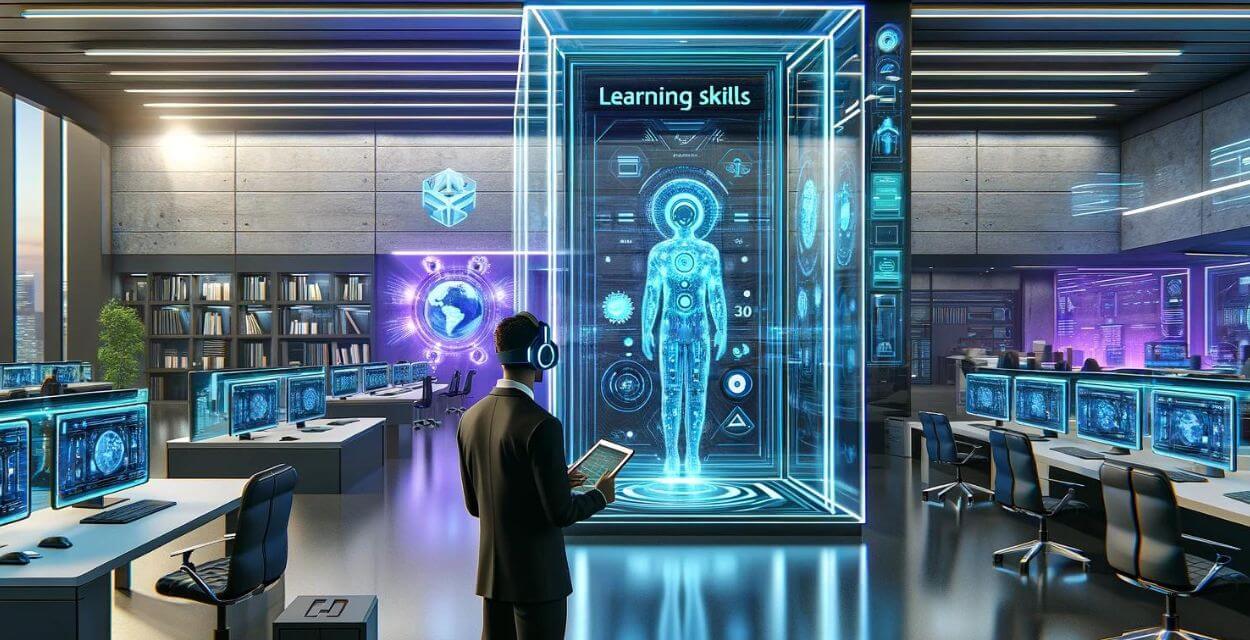
Here is a brief breakdown of the benefits and applications of these new technologies:
- XR in training and development can provide realistic simulations of real-world tasks, creating opportunities for skill practice and enhanced knowledge retention
- VR can allow employees to communicate beyond conventional video calls by using custom avatars and other L&D innovations, increasing their social engagement
- AR can enhance virtual collaboration using 3D models and other visualizations, which can be interacted with and shared in a virtual setting, regardless of location differences
- MR takes these advances another step further by creating a fully interactable depiction that seamlessly blends virtual objects and real settings
From advanced skill practice to non-location-specific collaboration, we have only scratched the surface of using virtual applications in learning and development. The growing investment in these tools will undoubtedly yield even greater use cases moving forward.
Mental Health and Well-being
Mental health and well-being are a higher priority since the post-pandemic surge of remote and hybrid learning models. According to data collected by the National Alliance on Mental Illness, over half (52%) of employees reported feeling burned out by their jobs in 2023, with only 35% of entry-level employees reporting their mental health as “very good.” Key indicators of burnout and poor mental health, particularly anxiety and depression, are at an even higher rate for remote and hybrid workers.
Therefore, L&D programs must account for mental health as a critical component of employee engagement and well-being. Following workplace learning trends, mental health programs can use social interaction, AI-driven analytics, and personalized learning paths to encourage well-being in the workplace.
Examples of these programs include learning paths that prioritize a healthy work-life balance, stress management resources, and socialization opportunities built into the learning management system. Additionally, managers can be trained to recognize the signs of anxiety and burnout in their workforce. They can then provide access to mental health resources such as learning modules, on-site yoga sessions, in-person counseling, and other options.
Soft Skills Training in the Workplace
Soft skills remain a priority for both employees and managers, with communication, teamwork, adaptability, and initiative topping the list. Soft skills training is difficult without socialization, which is why developing leadership and communication skills in remote employees has been a major pain point in many industries for the last few years.
Since remote work is here to stay, companies are turning to learning management systems to develop training modules that focus on soft skills training. These include lessons that enhance emotional intelligence, encourage leadership attributes, and foster interpersonal skills both on-site and in remote positions.
With the help of a centralized learning management system, managers can deploy hybrid learning models that encourage socialization between employees regardless of location. With soft skills training in such high demand due to its positive effect on employee retention, companies that take advantage of social technologies will be ahead of their competition in 2026 and beyond.
Diversity and Inclusion in Learning and Development
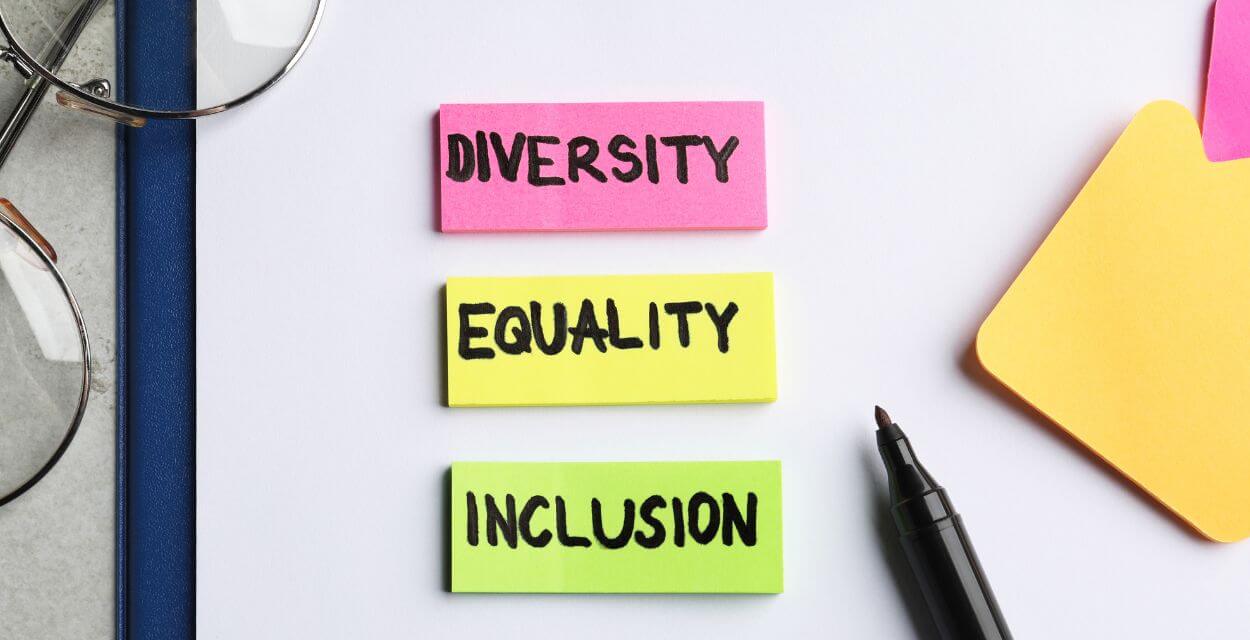
Businesses must embrace a human-centered approach to learning and development to create inclusive, innovative, and thriving work environments. Focusing on practices that foster diversity, equity, and inclusion (DEI) ensures that all employees feel valued and respected. As a result, diversity and inclusion training are some of the most requested features when businesses shop for learning experience platforms.
Maximizing DEI in today’s businesses requires keeping a firm grasp on the social aspects of inclusion that impact the modern workplace. With employees spread across in-person and remote work models, one of the most pressing challenges for modern L&D systems is reducing feelings of anonymity among these workers.
Program development should focus on giving all employees a voice and promoting equity in employee communication. This could include modules on addressing unconscious bias, team-building activities that foster equity, and projects that encourage diverse perspectives.
Emotional Intelligence (EI) in the Workplace
Emotional intelligence (EI) refers to skills in managing your own emotions as well as recognizing and navigating the emotions of others. Many businesses mistake emotional management for emotional control, but they discover through their increased turnover rates and reduced productivity that successful EI implementation requires a subtler approach.
Since strong emotional intelligence (EI) goes hand-in-hand with effective communication skills, projects and modules that foster employee interaction are a great starting point. Focusing learning modules on empathy and understanding can offer valuable insights into team dynamics, how employees handle diverse perspectives, and how they interact with remote colleagues.
Emotional intelligence may be intangible, but it is not unattainable. Modern businesses are learning to deploy learning modules that effectively help employees improve their EI. This allows them to be more resilient in the workplace, better leaders in the conference room, and better communicators throughout their organizations.
Green Skills Training and Sustainability in L&D
As organizations increasingly focus on sustainability, environmental responsibility and other green skills have become important training subjects. Sustainability starts at the top, with management that understands and applies green practices in their products and leadership styles.
Once a business is leading by example, it can use its learning management system to educate employees on sustainable practices, how to comply with environmental regulations, and how to implement green technologies. These practices may seem daunting, but they present numerous opportunities for businesses to create a more engaged and empathetic workforce.
The practical advantage of closing the “green skills gap” is that investors and consumers take notice of the companies making this change. In PwC’s 2024 Voice of the Consumer Survey, over 80% of modern consumers reported being willing to spend an average of 9.7% more on goods that were sustainably produced or sourced. Green skills training presents a compelling opportunity to link the needs of modern employees, the goals of the organizations they work for, and the desires of the consumers who support them.
Frequently Asked Questions
 Conclusion
Three patterns run through every trend on this list: personalization is the default, skills are the unit of measurement, and learning has to prove its value. The organizations that come out ahead in 2026 aren’t adding the most new tools. They’re connecting learning to business outcomes in a way they can prove.
Macorva’s workforce management tools can redefine the employee experience to promote engagement in a modern setting. With personalized learning modules and AI-enabled analytics, managers can automate data-heavy tasks, organize communication, and devote their time to creating a safe and productive learning environment for employees. L&D trends in 2026 are not just the factors that determine success this year. They are the factors that determine which companies will be the trendsetters in the next one.
Learn how Macorva's AI solutions can ensure your organization's L&D strategy takes advantage of the latest trends that will fuel its competitive edge. See a live demo here.
Editors note: this blog was originally published in May 2024 and has been updated for accuracy and comprehensiveness.